1. DeskFlex
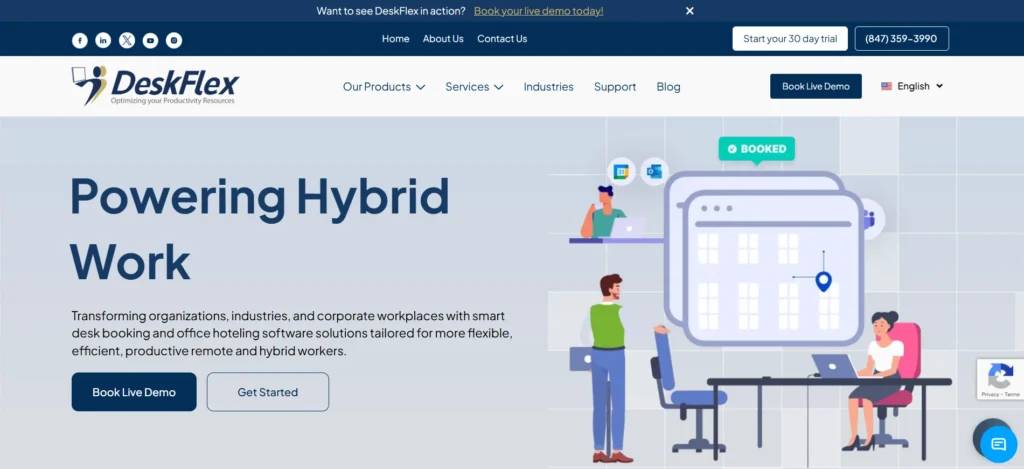
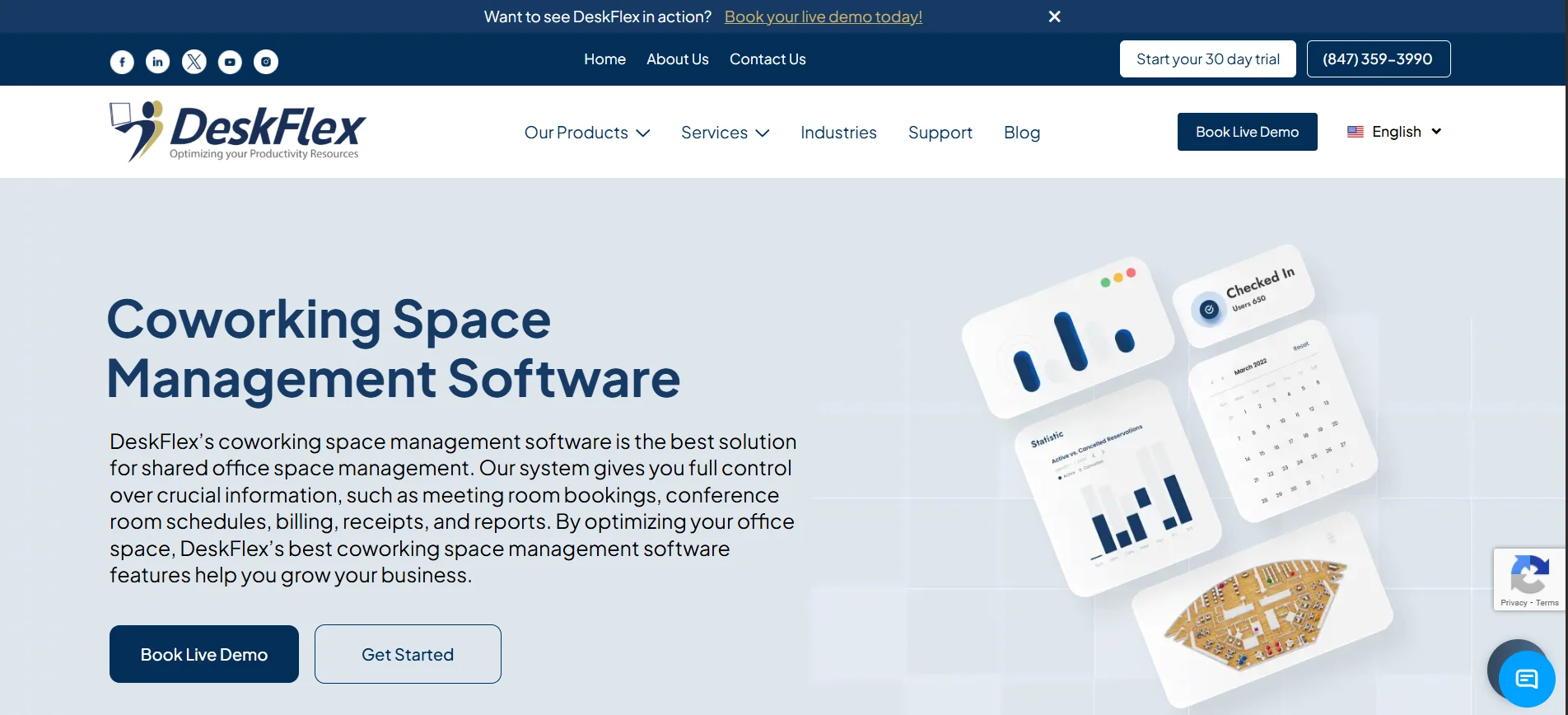
DeskFlex is a comprehensive coworking management solution designed for flexible and hybrid work environments. It helps operators manage desk bookings, meeting rooms, memberships, and billing from a single platform. Members can log in easily to book workspaces, reserve meeting rooms, and complete payments online. This self service experience reduces administrative workload and improves overall operational efficiency.
DeskFlex supports multiple booking models, including hourly usage, one time passes, and recurring memberships. Its reporting and analytics tools provide valuable insights into space utilization and occupancy trends.
Key Features
- Desk and meeting room booking
- Automated billing and receipt generation
- Membership and package management
- Visitor management and community interaction tools
- Reporting and analytics dashboard
Pricing
DeskFlex offers flexible pricing based on workspace size and feature requirements. A free trial and custom pricing plans are available upon request.
Pros
- Easy to use for both administrators and members
- Supports flexible booking and membership options
- Scales well for growing and multi location coworking spaces
- Strong reporting tools for space optimization
Cons
- Advanced customization may require initial setup support
- Pricing details are not publicly listed
2. Optix
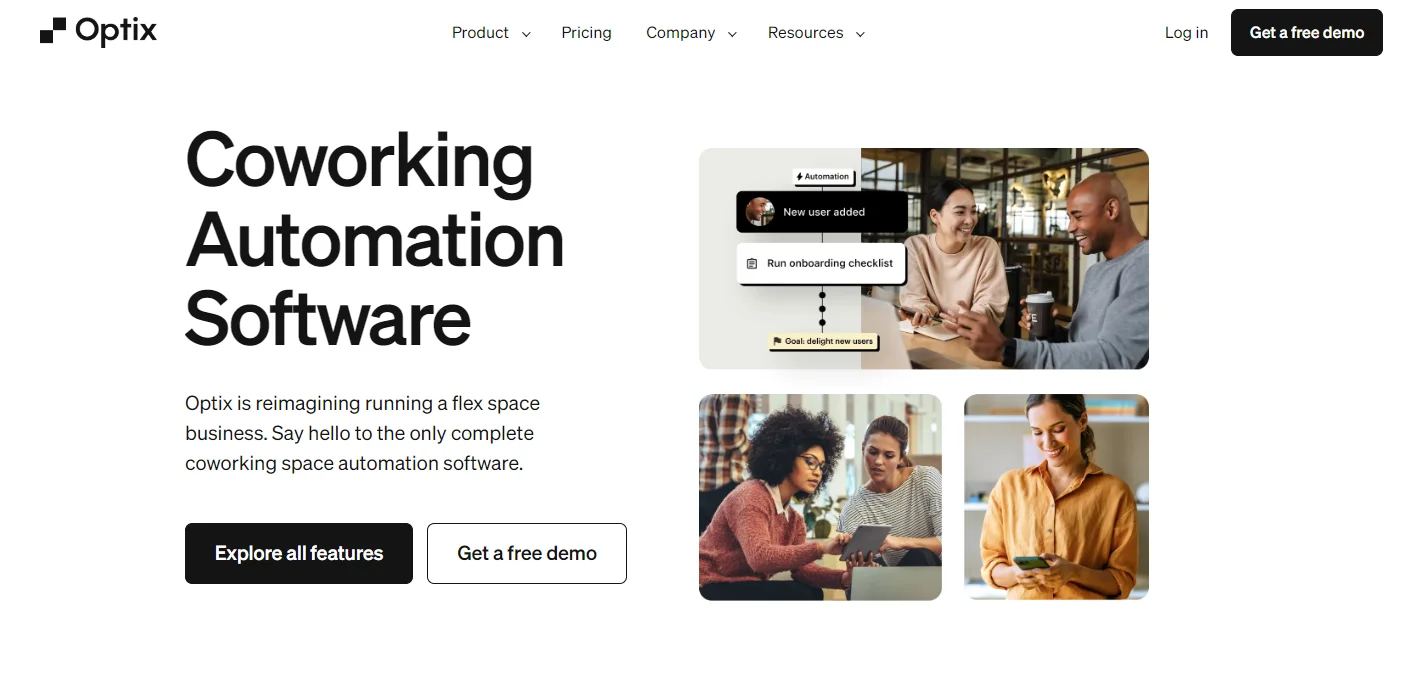
Optix is a modern coworking software platform focused on automation and personalized member experiences. It helps coworking spaces streamline daily operations while maintaining a consistent and branded identity. The platform supports automated desk booking, invoicing, and internal communication and collaboration tools. Its white label mobile app allows members to manage bookings and payments with ease.
Optix also includes community engagement features such as messaging and member directories. These tools help strengthen relationships and improve interaction within coworking spaces.
Key Features
- Automated desk and meeting room booking
- Branded mobile application for members
- Billing and payment automation
- Community messaging and member directory
Pricing
Optix offers tier based pricing depending on features and space size. Pricing is available upon request through a product demo.
- Essentials: $197/month (50 users, 1 location),
- Pro: $299/month (100 users, 1 location),
- Grow: $498/month (250 users, 1 location),
- Scale: custom pricing.
Automations+ start at $50/month. Visitor management is $42/month extra on Essentials and Pro, and included in Grow and Scale. Extra locations are available on Pro (up to 2 at $85/month each) and Grow (up to 5 at $68/month each). Full brand removal is only available on Scale and comes as a one-time $1,199 fee.
Pros
- Strong automation for bookings and billing
- Modern design with branded mobile app
- Excellent community engagement tools
Cons
- Pricing may be higher for smaller coworking spaces
- Some advanced features require higher tier plans
3. OfficeRnD
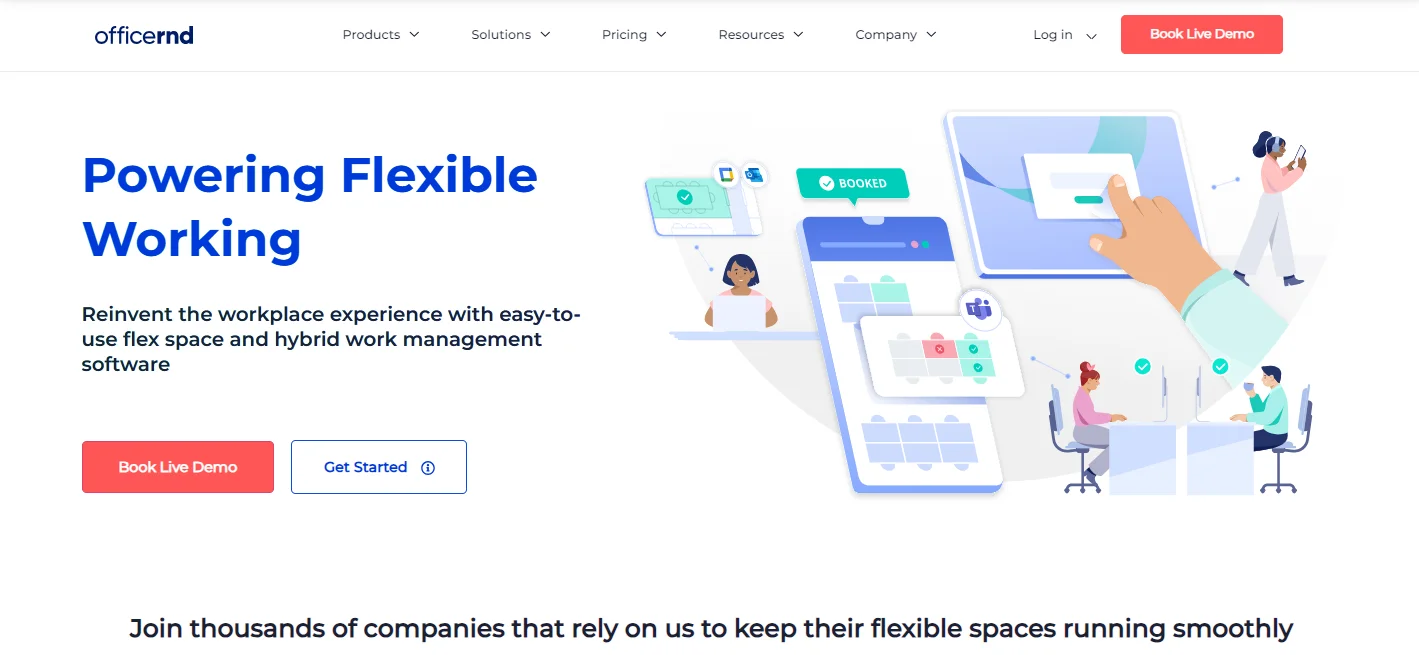
OfficeRnD provides coworking management software for flexible offices and hybrid workplaces. It supports desk booking, membership management, billing automation, and space analytics. OfficeRnD Flex is built for coworking operators managing shared spaces and memberships. OfficeRnD Hybrid supports organizations coordinating in office and remote work schedules.
The platform integrates with tools like Microsoft Teams and Google Calendar for smoother scheduling. These integrations help teams stay connected and organized across locations.
Key Features
- Desk and meeting room scheduling
- Automated billing and payment processing
- Calendar and collaboration tool integrations
- Space utilization and performance analytics
Pricing
OfficeRnD offers subscription based pricing depending on product and features selected. Custom pricing is provided based on business size and requirements. You need to contact the team for a quote.
- Start: (100 Members, 1 location),
- Grow: (200 Members, 2 location),
- Scale: custom pricing.
Pros
- Powerful feature set for coworking and hybrid workplaces
- Strong integrations with popular productivity tools
- Detailed analytics for space optimization
Cons
- Platform may feel complex for smaller teams
- Initial setup requires time and planning
4. Nexudus
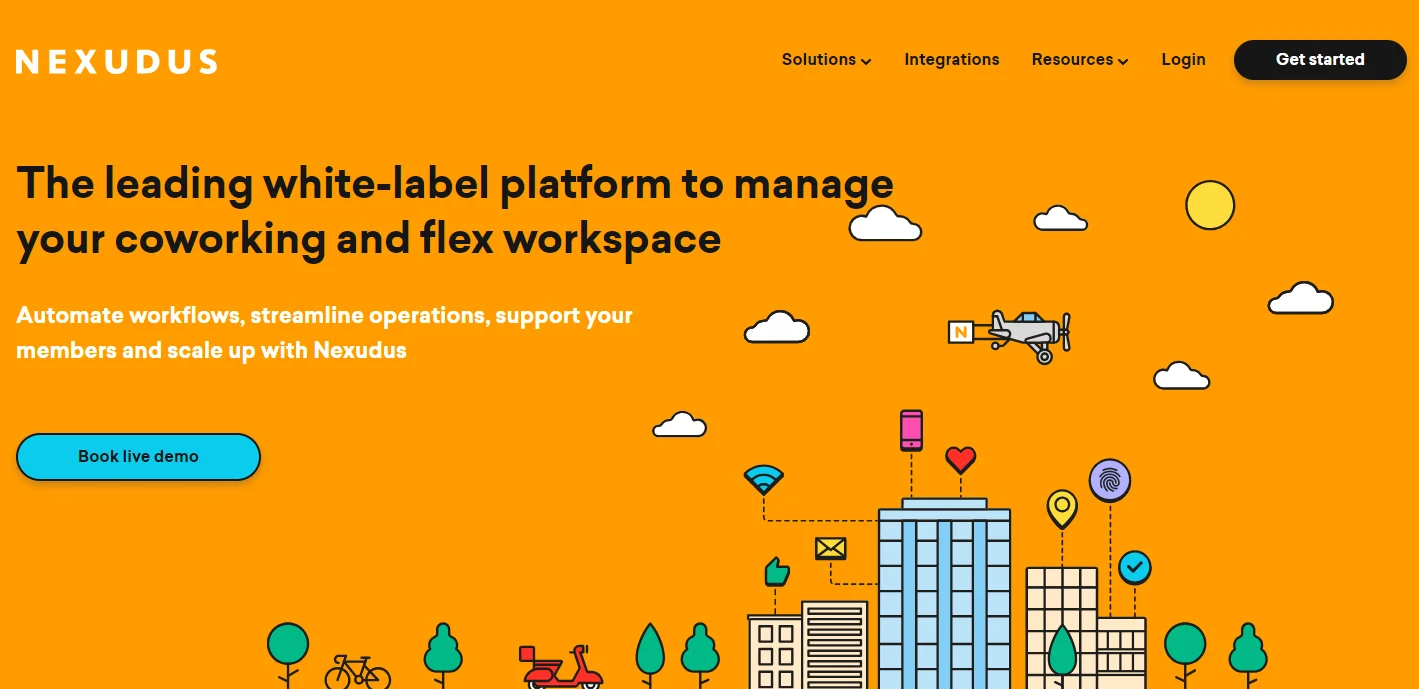
Nexudus is a full featured coworking management platform built for large and community driven spaces. It supports invoicing, bookings, member management, and visitor access control. Members can book resources, check availability, and manage payments through an online portal. Community tools allow members to join events, participate in discussions, and connect with others.
Nexudus also includes mail handling, inventory tracking, and access control integrations. These features support complex operational needs in larger coworking environments.
Key Features
- Automated invoicing and payment management
- Member portal and mobile application
- Room booking and contactless check in
- CRM and lead management tools
Pricing
Nexudus pricing starts at $150 per month per location for up to 80 active users, and it scales based on active members.
In Nexudus, an active user is someone with a current membership, or someone who has been invoiced or made a booking in the last 30 days. Other contacts can stay in your CRM without counting toward your paid user total.
Common add-ons include:
- White-label mobile app: $150/month for up to 5 locations,
- Explore Pro analytics: $100/month + $25/month per location,
- Nexudus Academy training: $150/month for one location + $25/month per additional location (3-month minimum).
Pros
- Comprehensive feature set for large coworking spaces
- Strong community and member engagement tools
- Highly customizable platform
Cons
- Interface can feel overwhelming at first
- Setup and configuration may require technical assistance
5. Cobot
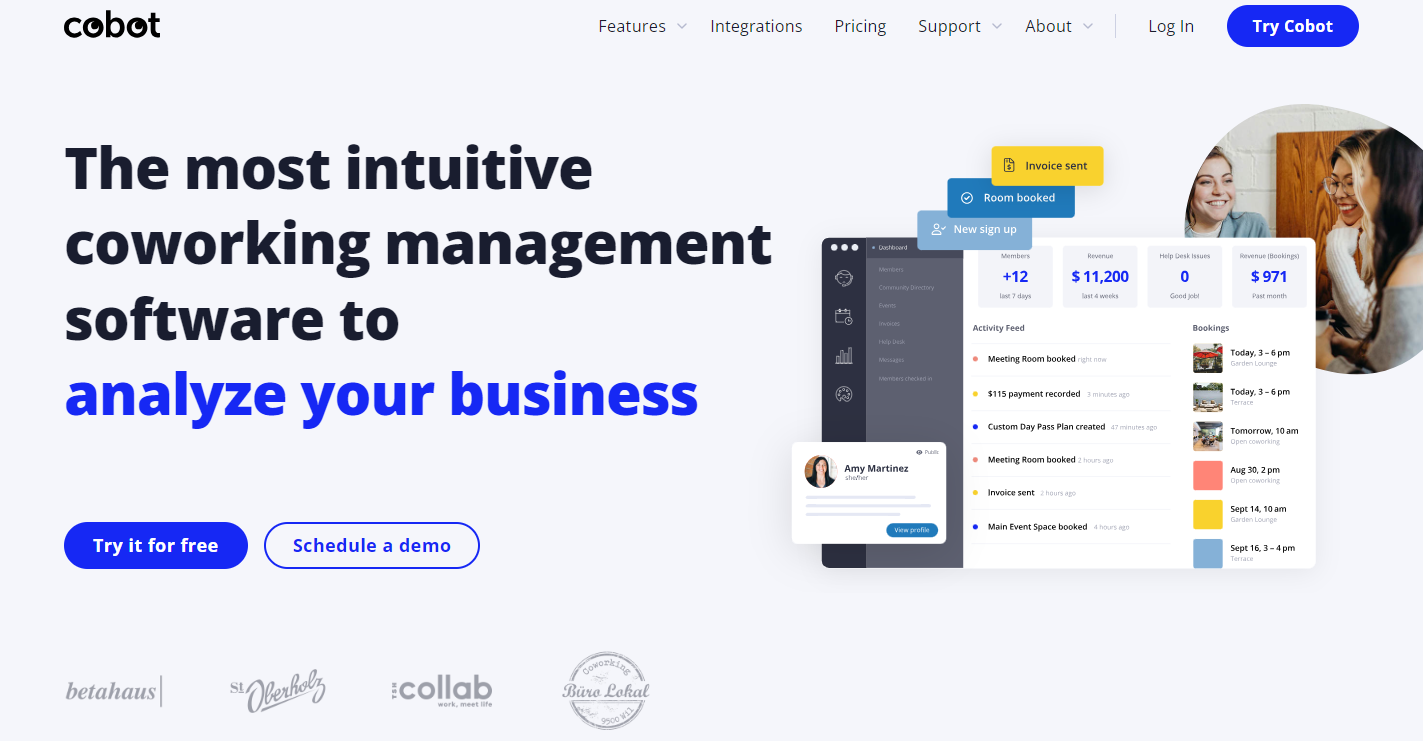
Cobot is a simple and reliable coworking management solution focused on essential operations. It helps operators manage bookings, invoicing, and member communication efficiently. The platform includes a lightweight CRM to track visitors, leads, and event attendees. Cobot also supports access control integrations and occupancy analytics.
Its open API allows coworking spaces to connect additional tools as their needs evolve. This flexibility supports gradual growth without unnecessary complexity.
Key Features
- Room and resource booking
- Automated invoicing and billing
- Member directory and CRM
- Analytics and integration options
Pricing
Cobot starts at $63/month (annual billing) for up to 10 paying members, and then scales up as your paying member count grows. As a rough example, a space with about 100 members would pay around $374/month. Larger multi-location or enterprise operations can get custom quotes beyond the highest standard tier.
Pros
- Simple interface and quick setup
- Affordable pricing for smaller spaces
- Open API for integrations
Cons
- Limited advanced customization
- Fewer enterprise level features
6. Archie
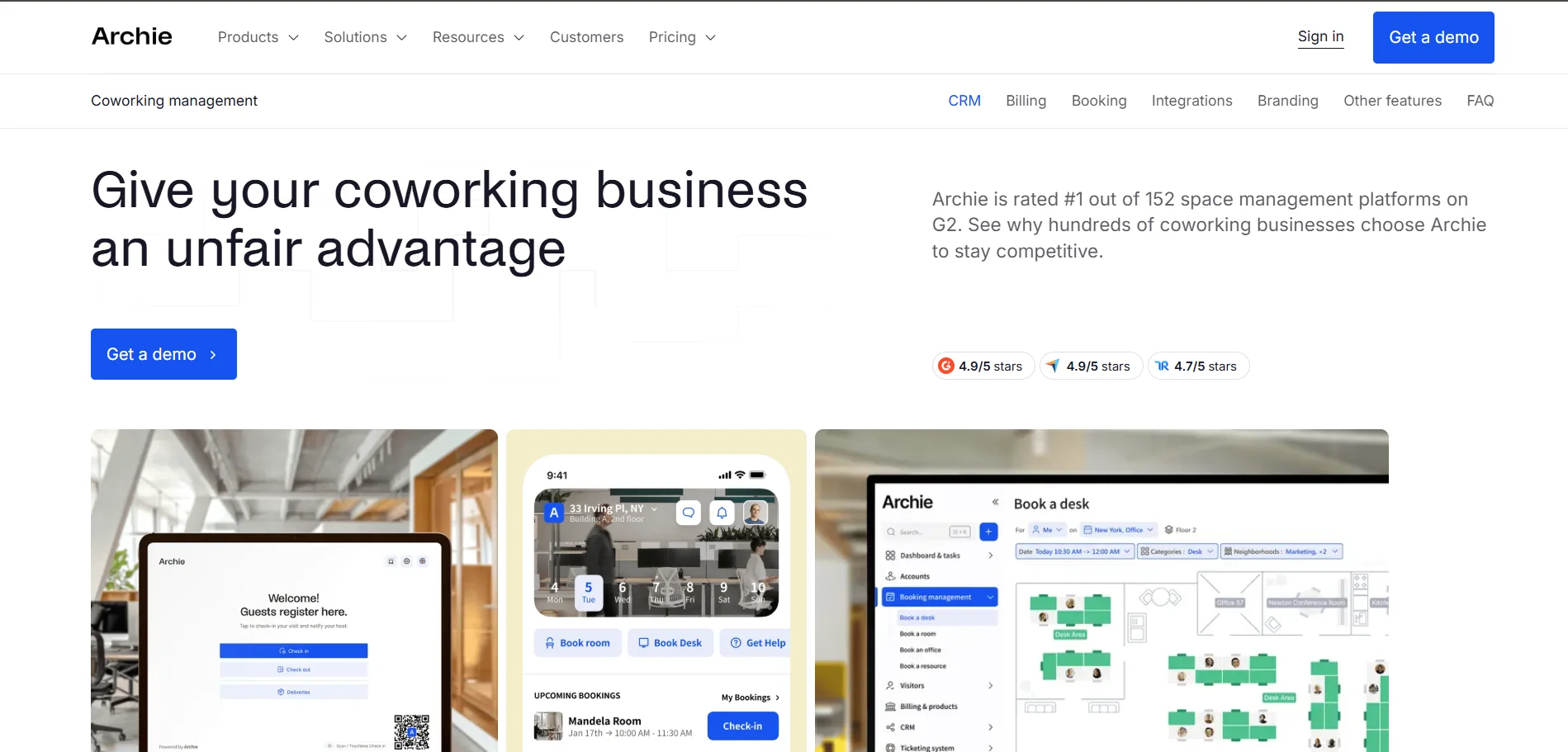
Archie is a modern workplace and coworking management platform designed for enterprise and flexible offices. It helps teams manage space usage, visitor access, and employee experience from a central system. The platform focuses strongly on security, workplace analytics, and operational efficiency. Archie integrates with access control systems to manage permissions and track office usage.
Its dashboards provide insights into occupancy trends and visitor activity. This helps operators make informed decisions about space planning and security policies.
Key Features
- Desk and meeting room management
- Visitor registration and access control
- Workplace analytics and reporting
- Integrations with security systems
Pricing
Archie offers custom pricing based on workspace size and feature requirements. Pricing details are available through a sales consultation.
- Starter: $165/month (1 location, up to 100 active members),
- Pro: $257/month (up to 2 locations, up to 200 active members, plus extras like a white-label domain and visitor management),
- Enterprise: Custom pricing.
Extra locations start at $90/month, each additional 50 members costs $50/month, and the white-label mobile app is $90/month per location.
An active user is someone who books a resource (like a desk, meeting room, or private office) or is on a subscription plan. Visitors and event attendees do not count, and a person added across multiple locations still counts as one user.
Pros
- Strong security and access control features
- Suitable for large and enterprise level workspaces
- Detailed analytics and reporting tools
Cons
- Not ideal for small coworking spaces
- Higher pricing compared to basic coworking tools
7. Spacebring
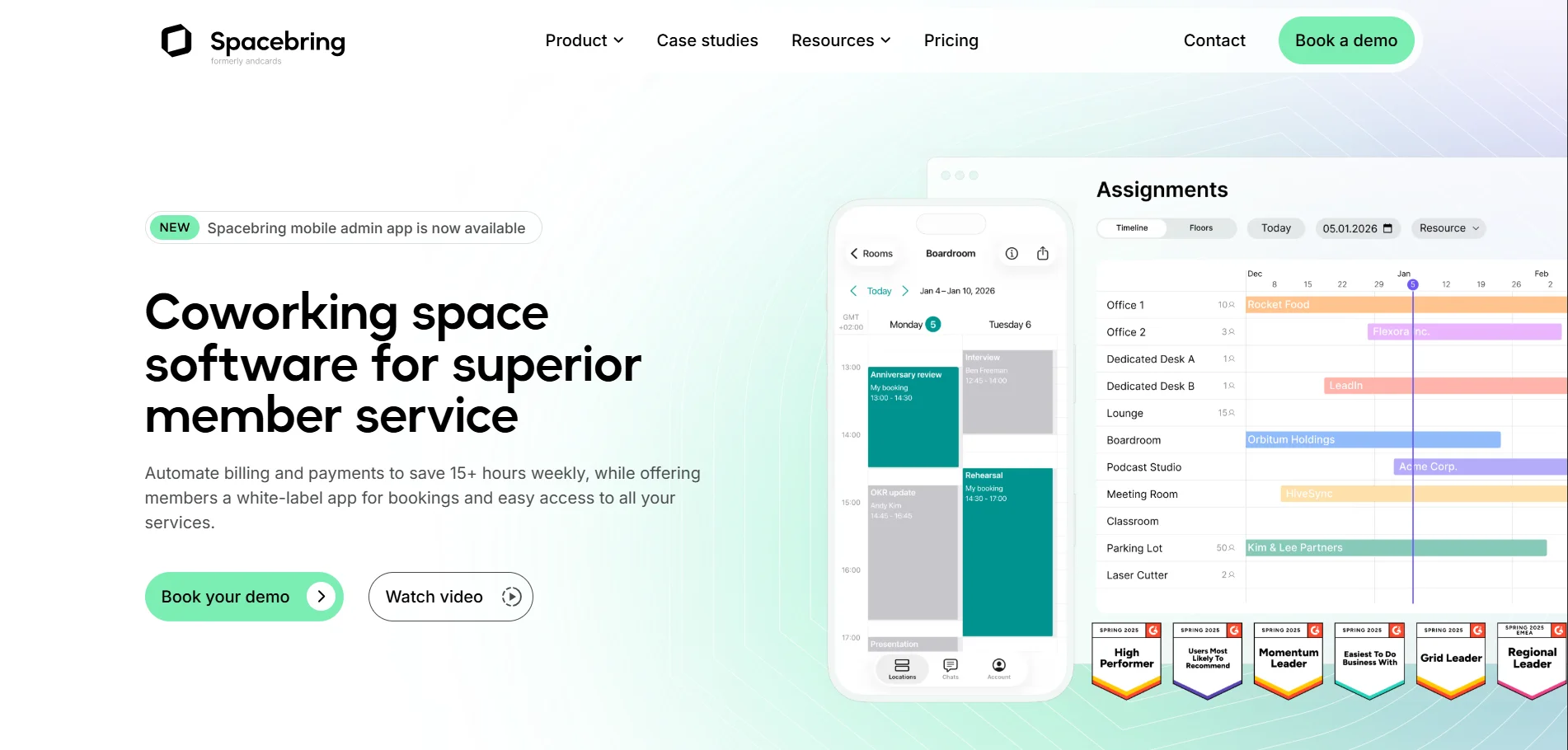
Spacebring is a coworking management platform focused on member engagement and community experience. It helps operators manage bookings, communication, and member interactions in one place. The platform emphasizes simplicity and collaboration between members. Spacebring offers tools for messaging, event announcements, and resource booking.
Its clean interface makes it easy for members to navigate and engage daily. This improves satisfaction and encourages community participation.
Key Features
- Desk and room booking
- Member communication and messaging tools
- Community event management
- Analytics for engagement tracking
Pricing
Spacebring offers subscription based pricing depending on the number of active members. Pricing details are available upon request.
- Essential at about $200/month,
- Pro at $264/month,
- Enterprise with custom pricing.
Essential supports 1 location and up to 100 members. Pro supports 2 locations and up to 150 members, with extra locations at $59/month per location.
Additional members cost $71/month per extra 40 members (Essential) or 50 members (Pro). There are also add-ons like the member mobile app, visitor reception, room display, floor display, and API/webhooks.
Pros
- Strong focus on community engagement
- Easy to use interface for members
- Good communication and collaboration tools
Cons
- Limited advanced billing features
- Fewer enterprise level integrations
8. Coworks
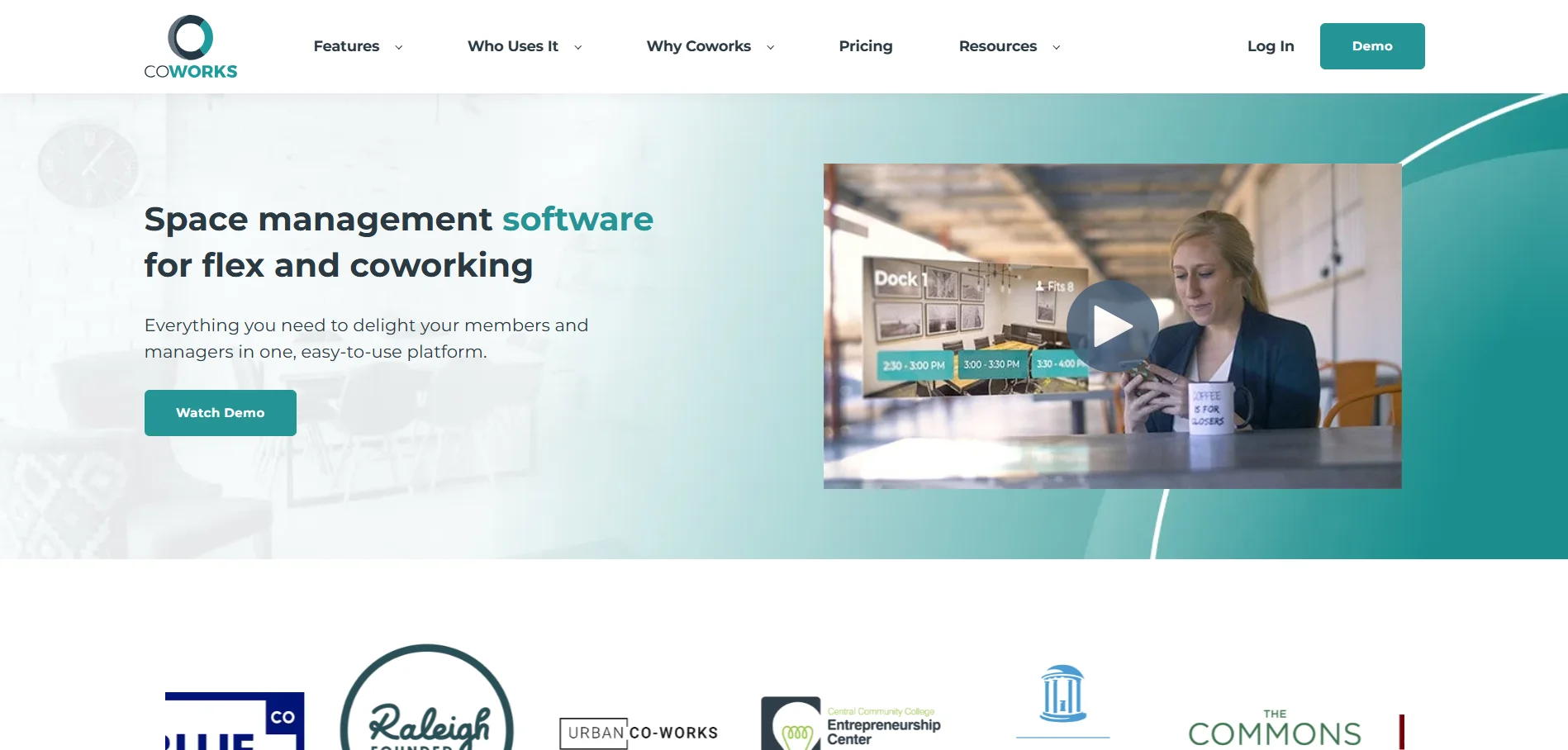
Coworks is a simple coworking management solution designed for smaller shared workspaces. It helps operators manage desk bookings, invoicing, and member information efficiently. The platform focuses on affordability and ease of use. Coworks allows members to book desks and manage payments without complexity.
Its straightforward design reduces training time for staff and members. This makes it suitable for coworking spaces with limited operational resources.
Key Features
- Desk and resource booking
- Member management and invoicing
- Basic reporting tools
- Simple user interface
Pricing
Coworks offers affordable monthly pricing suitable for small teams. Pricing details vary based on features and member count.
- Hybrid Workspace: $149/month (annual) or $199/month (monthly), up to 150 members,
- Coworking Premium: $249/month (annual) or $299/month (monthly), up to 250 members,
- Enterprise: custom pricing (unlimited members).
Coworks says pricing is not based on member count, but the published tiers still include member caps. White-labeling and multi-location support are available as paid add-ons, and billing features are included at the Premium tier and above.
Pros
- Budget friendly pricing
- Easy setup and usage
- Suitable for small teams
Cons
- Limited scalability
- Fewer advanced features
9. Proximity
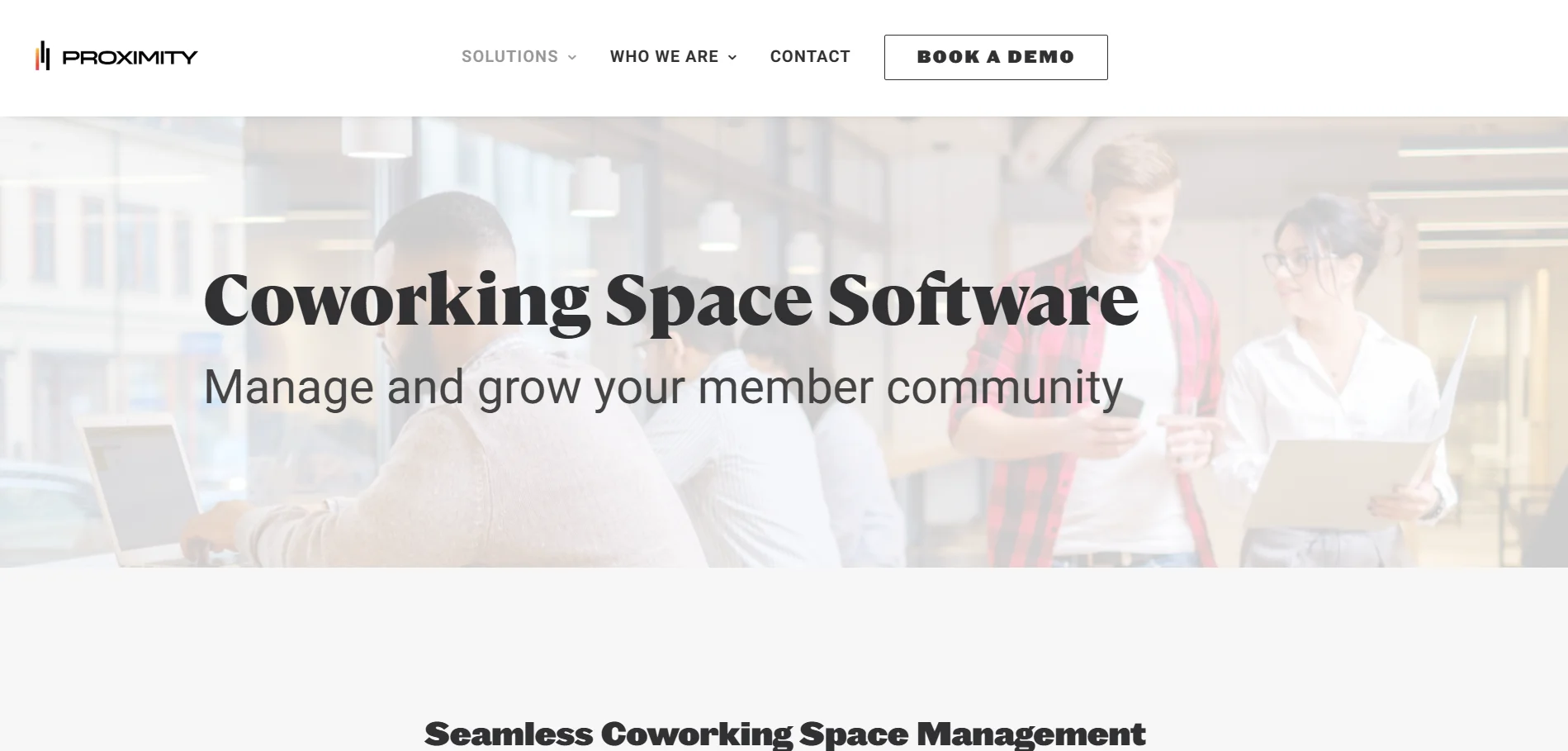
Proximity is a workplace management platform designed for hybrid and corporate work environments. It helps organizations track office attendance and manage desk usage effectively. The platform focuses on analytics and workforce planning. Proximity provides insights into employee attendance and space utilization.
It is less focused on community features and more on operational reporting. This makes it suitable for structured office environments.
Key Features
- Desk booking and attendance tracking
- Workplace analytics and reporting
- Hybrid work management tools
- Integration with office systems
Pricing
Proximity offers subscription based pricing depending on user count and features. Custom pricing is available for larger organizations.
Proximity publishes tiered pricing per location based on member count. The starting tier shown is $189/month for up to 40 members, with higher tiers scaling up (for example, 85, 150, 250 members), plus larger plans for bigger operations.
Common add-ons listed include Door Access at $99/location/month and Wi-Fi management at $59/location/month.
Pros
- Strong analytics for hybrid work management
- Useful for corporate environments
- Clear reporting dashboards
Cons
- Limited community engagement tools
- Not designed for traditional coworking spaces
10. Habu
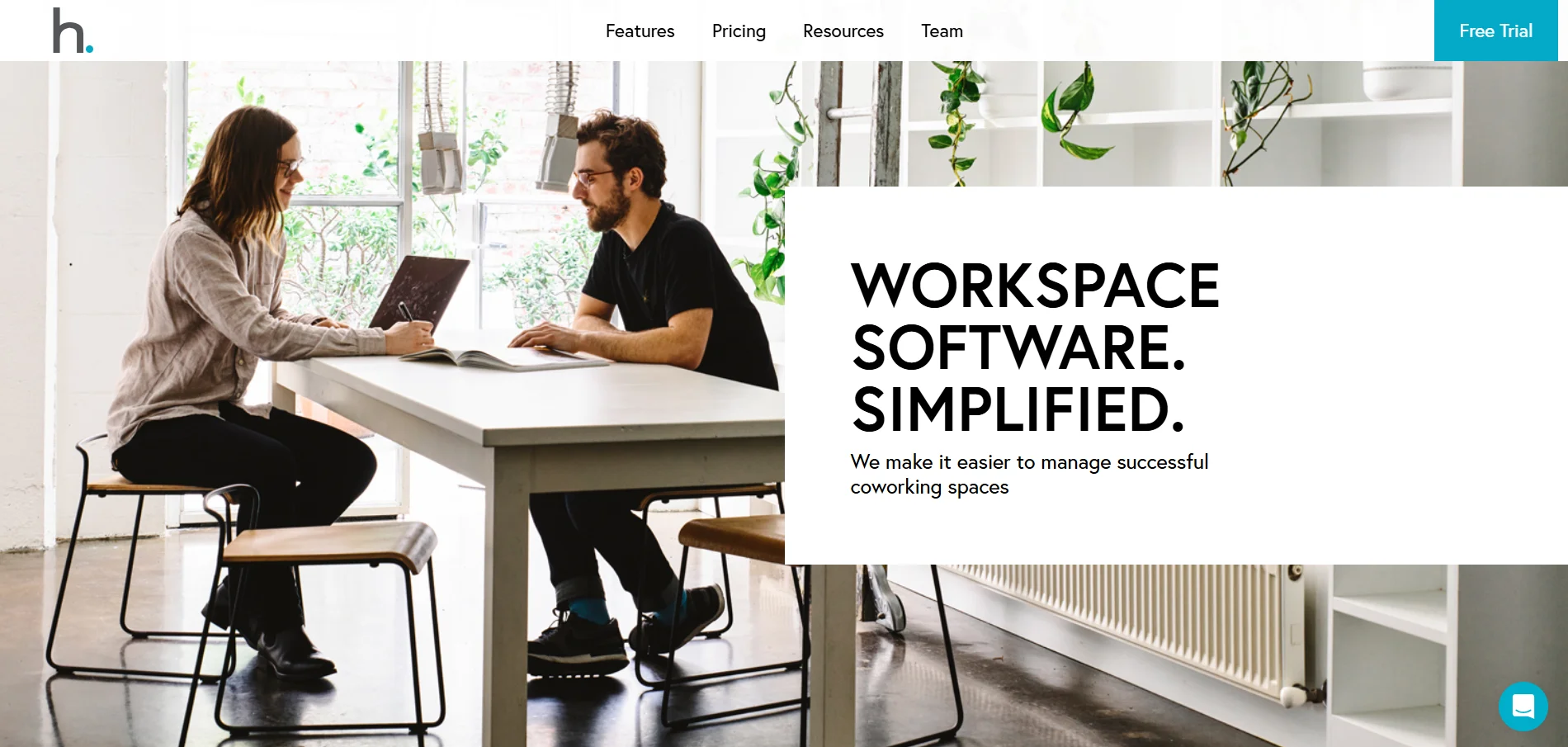
Habu is a flexible workplace and coworking software designed for modern office environments. It supports desk booking, space management, and workplace analytics. The platform offers a clean interface that simplifies daily workspace interactions. Habu integrates with existing tools to support scheduling and reporting.
Its focus on usability makes it accessible for teams and administrators alike. This helps reduce friction in daily workspace management.
Key Features
- Desk and meeting room booking
- Workspace analytics and insights
- Integration with business tools
- User friendly interface
Pricing
Habu offers mid range pricing based on workspace size and feature selection. Pricing details are available upon request.
Habu pricing scales by active members (someone with an active subscription, which means that team members and casual users do not count).
Starting points include $48/month for 30 active users, then tiers like $60/month (50 users), $92/month (80 users), and $132/month (120 users).
Pros
- Clean and intuitive interface
- Flexible setup options
- Suitable for modern workplaces
Cons
- Smaller ecosystem compared to major platforms
- Limited advanced coworking specific features